Virginia Otis
The Canterville GhostVirginia Otis is the fifteen-year-old daughter of Hiram B. Otis and the character whose pity and courage resolve the haunting of Canterville Chase. Introduced as an accomplished, spirited girl, she moves from treating the ghost as an eccentric presence to recognizing his loneliness and remorse; by accompanying him into the hidden chamber and praying beside his remains, she helps bring peace to the house and release to Sir Simon de Canterville.
Identity and Background
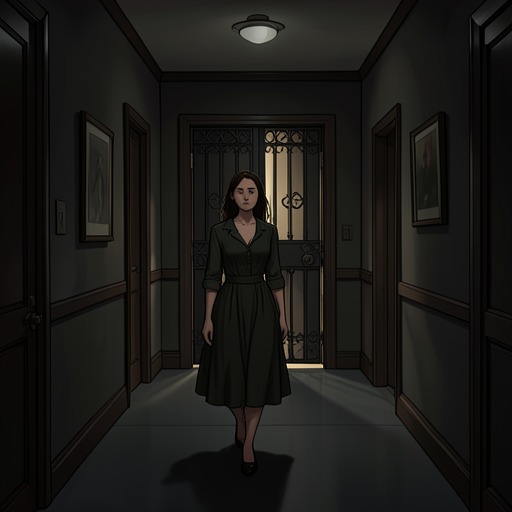
Virginia is introduced as Miss Virginia E. Otis, a girl of fifteen with large blue eyes and a notably independent, athletic nature. She has raced Lord Bilton on her pony around the park and won, an episode that also establishes her early connection with the young Cecil, Duke of Cheshire: delighted by her victory, he proposed to her on the spot, only to be sent back to Eton College by his guardians.
Her family arrives at Canterville Chase after Hiram B. Otis purchases the property despite warnings that it is haunted. Lord Canterville explains that the ghost has appeared for centuries, and that the family’s history includes the murder of Lady Eleanore de Canterville by her husband, Sir Simon. Virginia thus enters a house where inherited violence and supernatural legend have been treated as established facts, even as her family’s American practicality initially meets them with skepticism.
From Encounter to Compassion
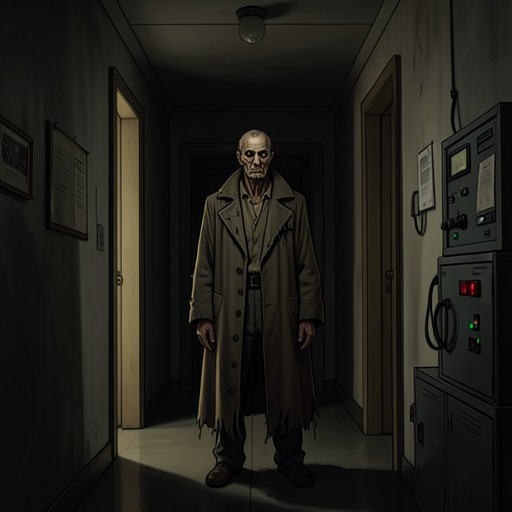
A few days after riding on Brockley meadows with Cecil, Virginia tears her riding habit on a hedge and slips toward the house by the back staircase so that no one will see it. Passing the Tapestry Chamber, she looks in, expecting to find her mother’s maid, and instead discovers Sir Simon sitting by the window. He appears deeply dejected. Although Virginia’s first impulse is to run away, pity replaces fear, and she tries to comfort him by saying that her brothers are leaving for Eton and that, if he behaves, they will no longer trouble him.
The conversation exposes how far her assumptions are from his condition. Sir Simon tells her that he is lonely, unhappy, and unable to sleep; he says he has not slept for three hundred years. Virginia, who initially treats sleep as an ordinary matter, becomes grave. She kneels beside him and asks whether he has anywhere to rest. His answer imagines a garden beyond the pine woods, with deep grass, hemlock flowers, a nightingale, and a yew tree spreading over those who sleep there. Her attention to his weariness marks a decisive change: she no longer sees him simply as the family’s troublesome ghost, but as a suffering figure in need of peace.
The Prophecy and Virginia’s Choice
Sir Simon explains the Canterville prophecy as a condition for his release. Virginia must weep with him for his sins because he cannot weep, and pray with him for his soul because he has no faith. If she remains sweet, good, and gentle, the angel of death may show him mercy. He also warns that she will meet frightening shapes and hear threatening voices, though the powers of Hell cannot overcome the purity of a child.
Virginia answers the appeal by deciding to help. She says she is not afraid and will ask the angel for mercy on his behalf. Sir Simon takes her hand and leads her across the Tapestry Chamber. The embroidered huntsmen urge her to turn back, and figures carved on the chimneypiece warn that they may never see her again, but she keeps going. At the end of the room, Sir Simon speaks words she cannot understand; the wall fades, revealing a dark opening, and they pass through before the wainscoting closes behind them. Virginia’s courage is expressed not through force but through continued trust and compassion in the face of warnings.
Discovery and Release
When Virginia is found, she tells her family that she has been with the ghost, that he is dead, and that he was truly sorry for what he had done. She also says that he gave her a box of jewels before he died. Rather than leave the discovery unexplained, she leads the family through an opening in the wainscoting and down a narrow secret corridor. With Washington carrying a candle, they reach an iron-studded oak door that opens into a small, low room.
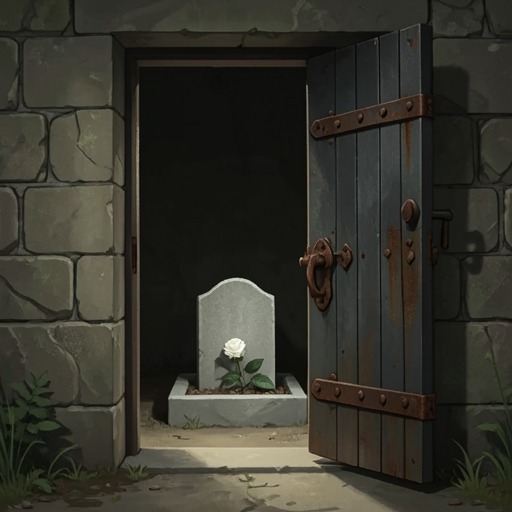
There the family discovers Sir Simon’s chained skeleton, attached to an iron ring embedded in the wall. A trencher and ewer have been left beyond his reach; the vessel is mould-covered, and the trencher holds only dust. The room reveals the hidden truth behind his disappearance and the story of his death. Virginia kneels beside the remains and prays silently while the others look on. At that moment, one of the twins sees that the old almond tree has blossomed in the moonlight. Virginia rises and declares that God has forgiven Sir Simon. The flowering tree and her prayer fulfill the prophecy’s signs, and the family’s discovery confirms that the house’s haunting has ended.
Relationships, Legacy, and Meaning
Virginia’s relation to Sir Simon is the story’s central moral bond. She recognizes both his wrongdoing and his remorse: when she later recounts the encounter, she says that he had been wicked but was genuinely sorry. She does not erase his past; instead, she responds to his present suffering and undertakes the act of prayer that he cannot perform for himself. Her intervention turns an old family crime and a centuries-long haunting into a possibility of forgiveness and rest.
The jewels Sir Simon gives her become part of the aftermath. Lord Canterville argues that they belong to Virginia, both because Sir Simon’s property passed to the Otis family with the purchase and because the jewels were not recorded as heirlooms. Hiram B. Otis is distressed when Lord Canterville refuses to reclaim them, but ultimately lets Virginia keep the gift. In the spring of 1890, when Virginia is presented at the Queen’s first drawing-room on the occasion of her marriage, her jewels attract general admiration. She receives the coronet associated with her marriage and becomes Duchess of Cheshire, marrying Cecil when he comes of age.
Marriage does not make Virginia disclose the experience that changed her. When Cecil asks her about the secret she has kept, she refuses to tell him, explaining that she owes Sir Simon a great deal: he made her understand what life is, what death signifies, and why love is stronger than both. Cecil accepts that she may keep the secret as long as she has his heart, and asks whether she will tell their children someday. Virginia blushes, leaving that future disclosure unresolved. The private memory remains hers, while its effects are visible in the completed release of Sir Simon, the peace restored to Canterville Chase, and her enduring account of love as a power greater than death.